
Jun 4, 2026
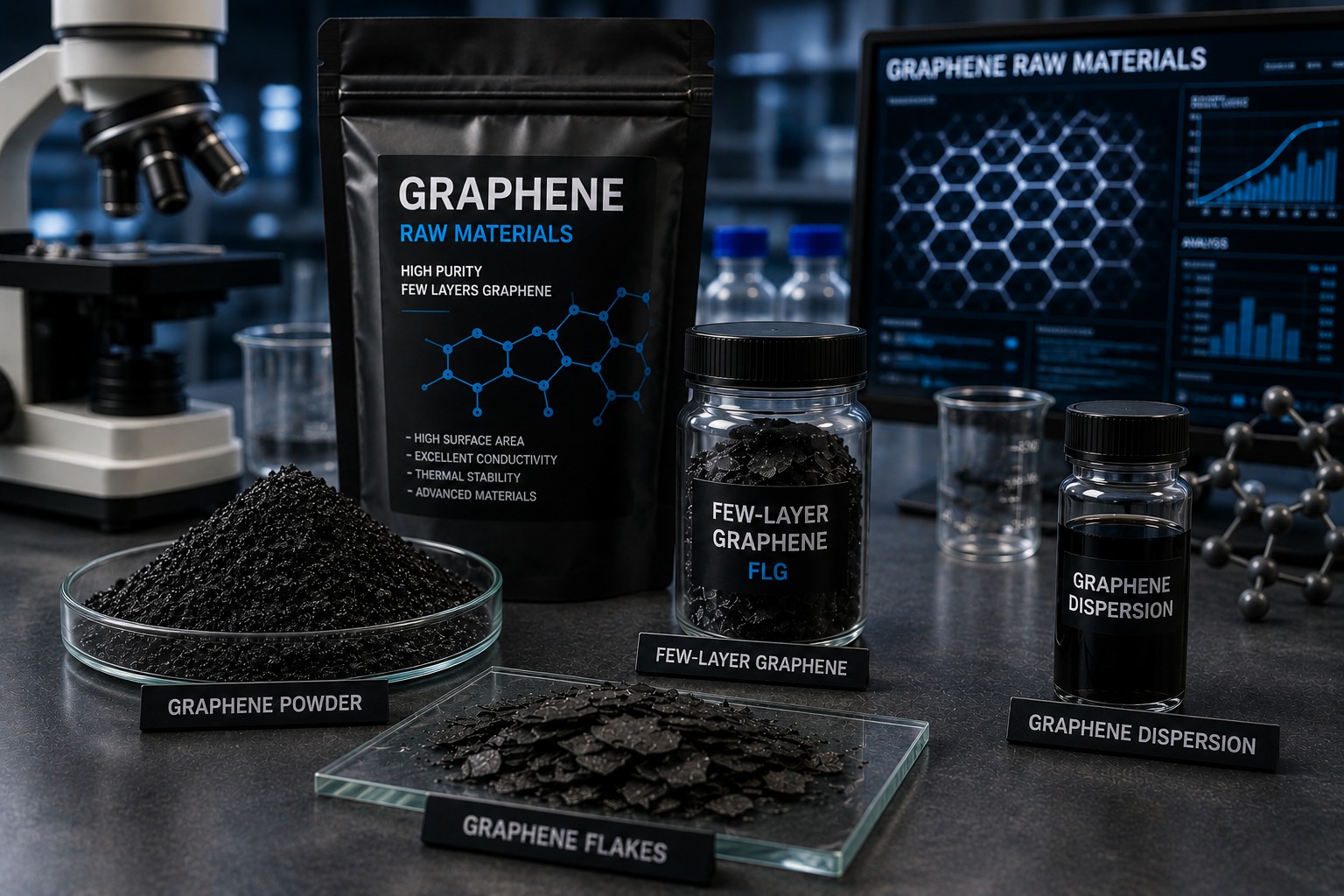
The pursuit of next-generation industrial efficiency often leads engineers to a singular, carbon-based revolution. At the heart of this transformation lies the strategic acquisition of graphene raw materials, the fundamental building blocks that dictate the mechanical and chemical ceiling of a finished product. For enterprises aiming to redefine durability or electrical performance, understanding the nuances of these inputs is no longer optional; it is a prerequisite for innovation. Integrating high-quality graphene raw materials into an existing production line requires more than just capital, it demands a granular understanding of how molecular structures translate into industrial-scale advantages.
What Are Graphene Raw Materials?
In the context of industrial procurement, raw materials are the precursor substances used to create more complex compounds. When we discuss graphene in this light, we are looking at various physical states of carbon that maintain the extraordinary properties of the "wonder material" while being optimized for specific manufacturing techniques.
Graphene as a Base Material
Pure graphene, in its idealized single-layer form, serves as the ultimate benchmark. However, for large-scale industrial applications, this base material is often provided in formats that allow for seamless integration into polymers, resins, or coatings. It acts as the "genetic blueprint" for the final composite's characteristics.
Few-Layer Graphene for Further Processing
Moving beyond single-sheet theory, Few-Layer Graphene (FLG) offers a pragmatic middle ground. FLG consists of several stacked layers of carbon atoms which, while slightly more robust than a single layer, retain the lion's share of graphene’s electrical and thermal benefits. It is an ideal candidate for industrial-scale processing where handling stability is paramount.
Graphene Powder Before Product Formulation
Before a material reaches the "formulation" stage, it often exists as a concentrated powder. These graphene raw materials are engineered for dispersibility. The morphology of the powder, its flake size and surface area, determines how effectively it will bond with other matrices during the blending phase of production.
Why Graphene Raw Materials Are Used in Material Development
The shift toward graphene-enhanced solutions is driven by a necessity to surpass the physical limits of traditional materials. By incorporating graphene raw materials into a development cycle, we enable a leap in performance that was previously thought unattainable in conventional metallurgy or polymer science.
To Improve Strength
One of the most compelling reasons for adoption is the astronomical strength-to-weight ratio. Even a fractional addition of graphene can significantly reinforce a host material, creating lightweight components that do not sacrifice structural integrity, a critical factor for the aerospace and automotive sectors.
To Support Conductivity
Whether for thermal management or electrical circuitry, graphene provides a high-speed highway for electrons. By utilizing these materials, you can develop heat sinks that dissipate energy more efficiently or conductive inks that pave the way for flexible electronics and advanced sensor technology.
To Add New Material Functions
Graphene is not merely an additive; it is a functional transformer. It can provide anti-corrosive properties, UV shielding, or even antimicrobial surfaces. This versatility allows your research and development teams to create multi-functional products that solve several engineering challenges with a single ingredient.
How to Choose the Right Graphene Raw Material
Selecting the appropriate precursor is a strategic decision that affects both the bottom line and the final product's efficacy. A mismatch here can lead to poor dispersion or sub-optimal performance.
Check the Graphene Form
You must evaluate whether your process benefits more from a slurry, a masterbatch, or a dry powder. Each form has a different interaction profile with existing machinery. Understanding the viscosity and compatibility of the carrier medium is essential for maintaining production speed.
Match It with the Final Product Plan
The intended application dictates the purity and flake size required. For high-end electronics, high-purity graphene raw materials are non-negotiable. Conversely, for structural concrete or heavy-duty coatings, the focus might shift toward cost-effective bulk formats that prioritize mechanical bonding.
Test the Material Before Production
Pilot-scale testing is the bridge between theory and profit. We always recommend rigorous trial batches to observe how the graphene behaves under your specific environmental conditions, such as pressure, temperature, and shear force, ensuring that the final output meets your rigorous quality standards. Navigating the complexities of advanced carbon materials requires a partner who understands the intricacies of industrial-scale supply. As a premier provider, Ravphene Ravelware focuses on delivering high-performance solutions tailored for your specific development needs. Our flagship Few Layers Graphene products are designed to offer superior dispersibility and structural consistency, ensuring that your transition into the future of material science is both efficient and successful. Whether you are looking to enhance conductivity or fortify your latest composite, our expertise in graphene raw materials ensures that your production line stays ahead of the global competition.
Recent Post

Extending Industrial Asset Lifespan Through Advanced Material Innovation
Aug 3, 2026

Building More Durable Infrastructure with Advanced Materials
Jul 28, 2026

Graphene in Smart Manufacturing: Enabling the Next Industrial Revolution
Jul 27, 2026
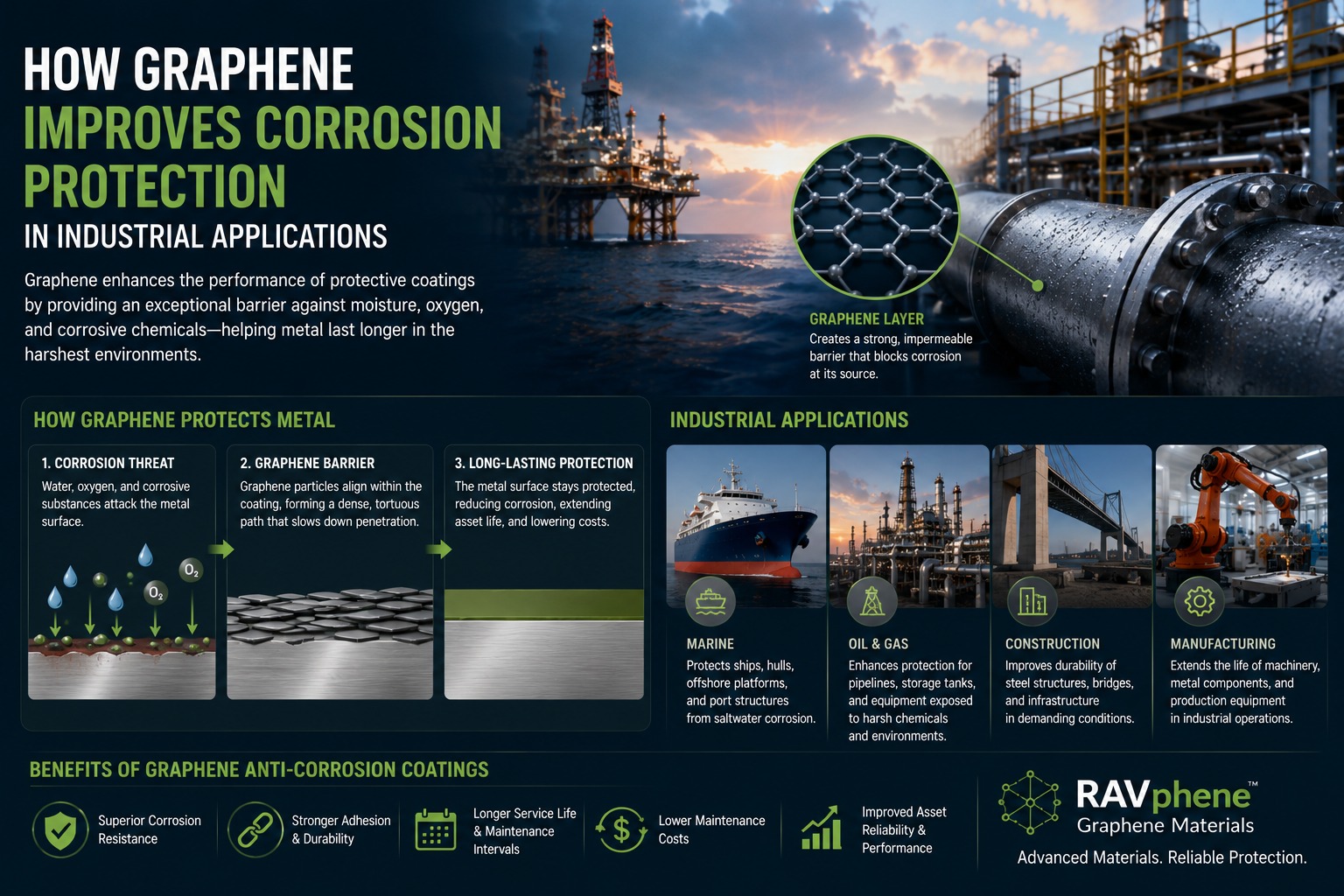
How Graphene Improves Corrosion Protection in Industrial Applications | RAVphene
Jul 21, 2026