Jun 2, 2026
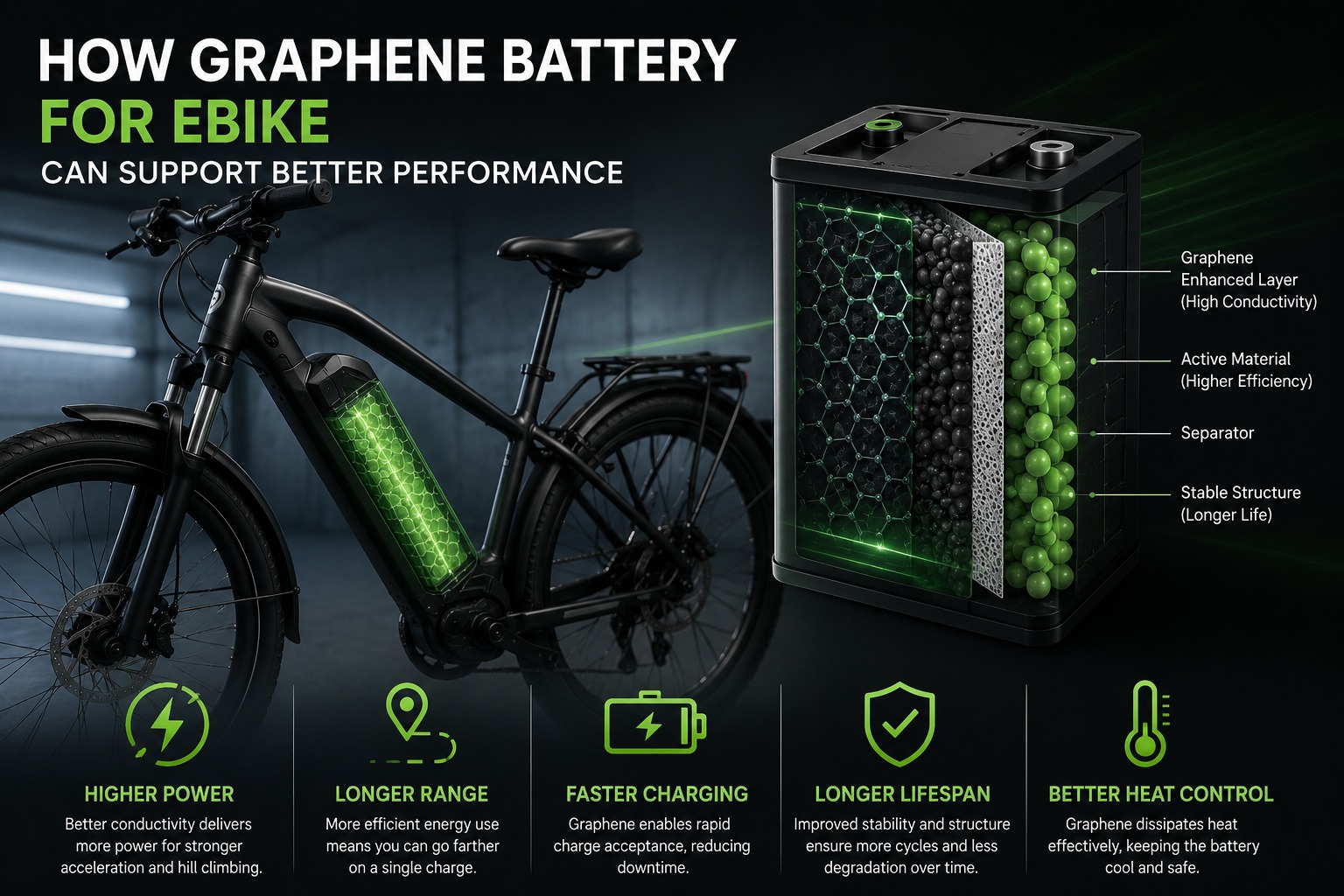
The global shift toward sustainable mobility has placed immense pressure on energy storage systems to evolve beyond traditional limitations. For manufacturers and industrial designers, the integration of a graphene battery for ebike applications represents a monumental leap in power density and operational longevity.
As we navigate the complexities of light electric vehicle (LEV) engineering, the demand for power sources that charge faster and last longer has never been more acute. By leveraging the extraordinary physical properties of graphene, we can unlock performance tiers that were previously deemed impossible with standard lithium-ion chemistries.
How Graphene Can Support Ebike Battery Performance
Integrating graphene into the electrochemical framework of an ebike power system is not merely an incremental upgrade, it is a fundamental transformation of how energy moves.
Here is how this "wonder material" redefines the capabilities of a graphene battery for ebike fleets and high-performance models.
Helps Improve Conductivity
At the molecular level, graphene’s hexagonal lattice allows electrons to migrate with nearly zero resistance. In the context of industrial battery production, incorporating graphene into the cathode or anode structures facilitates a rapid flow of current.
This enhanced electrical conductivity translates directly to reduced internal impedance. For your production lines, this means the graphene battery for ebike units can support higher discharge rates and significantly shorter charging cycles without the typical energy loss found in conventional graphite-based cells.
Supports Better Heat Control
Thermal management remains the primary bottleneck in LEV reliability. Graphene’s exceptional thermal conductivity allows it to act as a highly efficient heat sink within the cell architecture.
By dissipating heat evenly across the battery pack, we prevent the formation of "hot spots" that lead to premature degradation. This superior thermal regulation ensures that the battery operates within its optimal temperature window, even under heavy load or during rapid-charging phases, thereby protecting the integrity of the entire powertrain.
Helps Battery Materials Work More Efficiently
Graphene does not just work alone; it acts as a synergistic scaffold for other active materials. Its high surface area provides more "docking sites" for ions, which optimizes the chemical reactions during charge and discharge.
This efficiency means we can extract more power from a smaller footprint, allowing you to design ebikes that are lighter and more aerodynamic without sacrificing range or torque.
What to Consider in Graphene Battery Development
While the potential is vast, the transition to a graphene battery for ebike standards requires a sophisticated approach to material science and supply chain integration. Enterprise-level partners must look beyond the hype and focus on technical viability.
Battery Material Compatibility
Success in high-end battery manufacturing hinges on how well graphene integrates with existing precursors. Whether you are utilizing NCM, LFP, or silicon-anode technologies, the graphene must be dispersed uniformly to avoid agglomeration. Achieving a homogenous mix is critical to ensuring that the performance benefits are consistent across every unit produced in a mass-manufacturing environment.
Performance Testing Results
Rigorous empirical data must drive your development cycle. When we analyze the performance metrics of a graphene battery for ebike systems, we prioritize cycle life, C-rates, and energy retention over time.
It is vital to validate that the inclusion of graphene actually yields a measurable ROI in terms of watt-hours per kilogram, ensuring that the end product meets the stringent demands of the modern commercial market.
Long Term Safety and Stability
In the enterprise-to-enterprise sector, reputation is built on safety. Graphene enhances structural stability at the nano-scale, which can mitigate the risk of dendritic growth that often leads to internal short circuits.
Ensuring long-term chemical stability means fewer warranty claims and a more reliable product for your corporate clients and fleet operators. The future of electric micro-mobility is inextricably linked to advancements in carbon-based nanomaterials. As we strive to set new benchmarks for the industry, the choice of material supplier becomes the most critical variable.
At Ravphene Ravelware, we specialize in the production of high-grade Few Layers Graphene, specifically engineered to meet the rigorous demands of industrial battery applications. By partnering with us, you gain access to the technical expertise and material quality necessary to lead the market. We are committed to helping you transform the standard ebike into a high-performance machine through our cutting-edge graphene solutions. Together, we can redefine the boundaries of what is possible in energy storage.
Recent Post

Extending Industrial Asset Lifespan Through Advanced Material Innovation
Aug 3, 2026

Building More Durable Infrastructure with Advanced Materials
Jul 28, 2026
Graphene in Smart Manufacturing: Enabling the Next Industrial Revolution
Jul 27, 2026
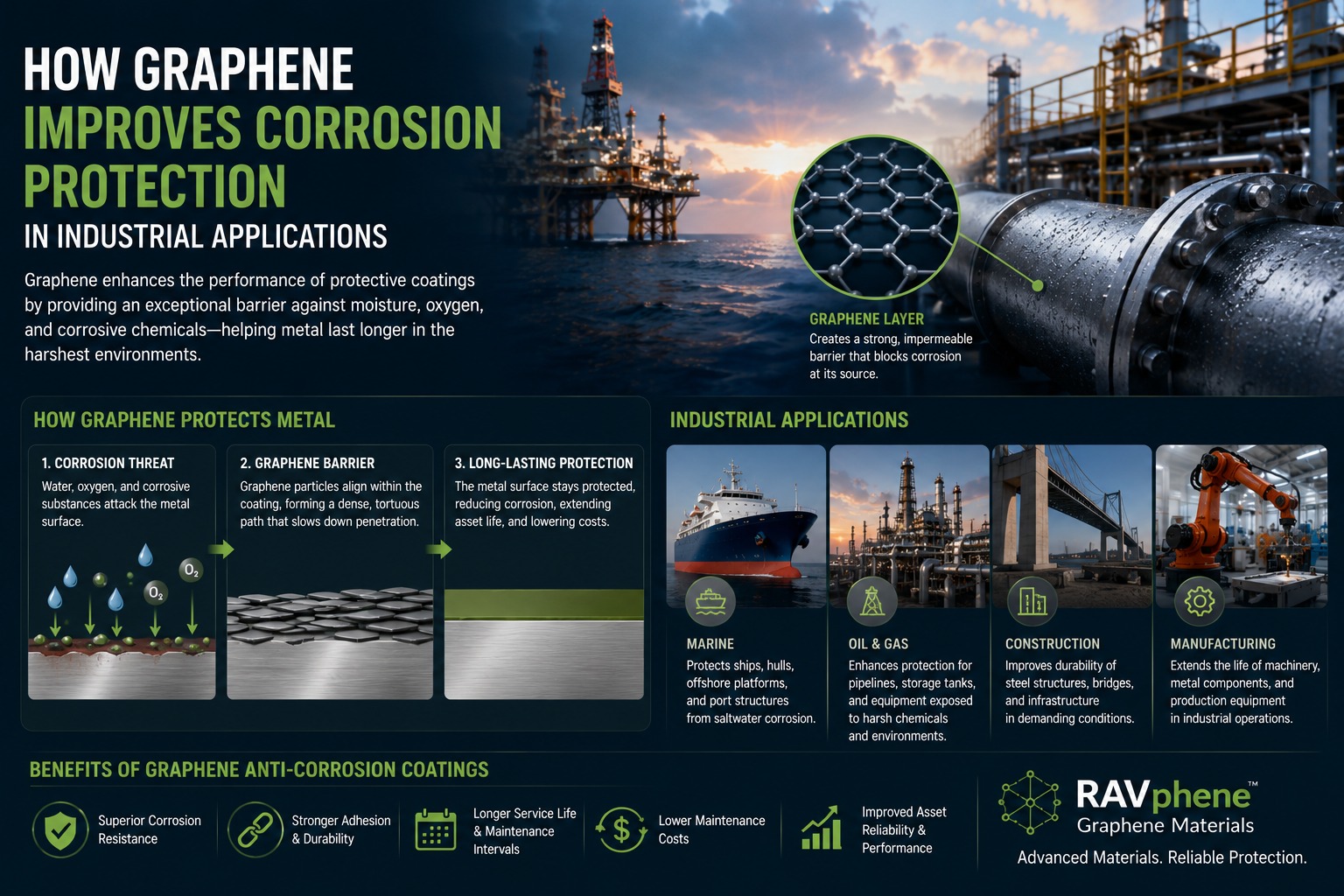
How Graphene Improves Corrosion Protection in Industrial Applications | RAVphene
Jul 21, 2026